
Filter by
Practice areas
Practice areas
Filter by
Keywords
Keywords

September 14, 2026
What New York’s Data Center Moratorium Says About Its AI Future New York’s push to become a leader in artificial intelligence comes with a practical challenge: AI requires enormous amounts of computing power, and that means data centers, electricity, and the infrastructure to support them. Cuddy + Feder Partner Christopher Fisher and Westchester County Association President & CEO Michael Romita take a closer look at the state’s data center moratorium ...
Read More >
August 05, 2026
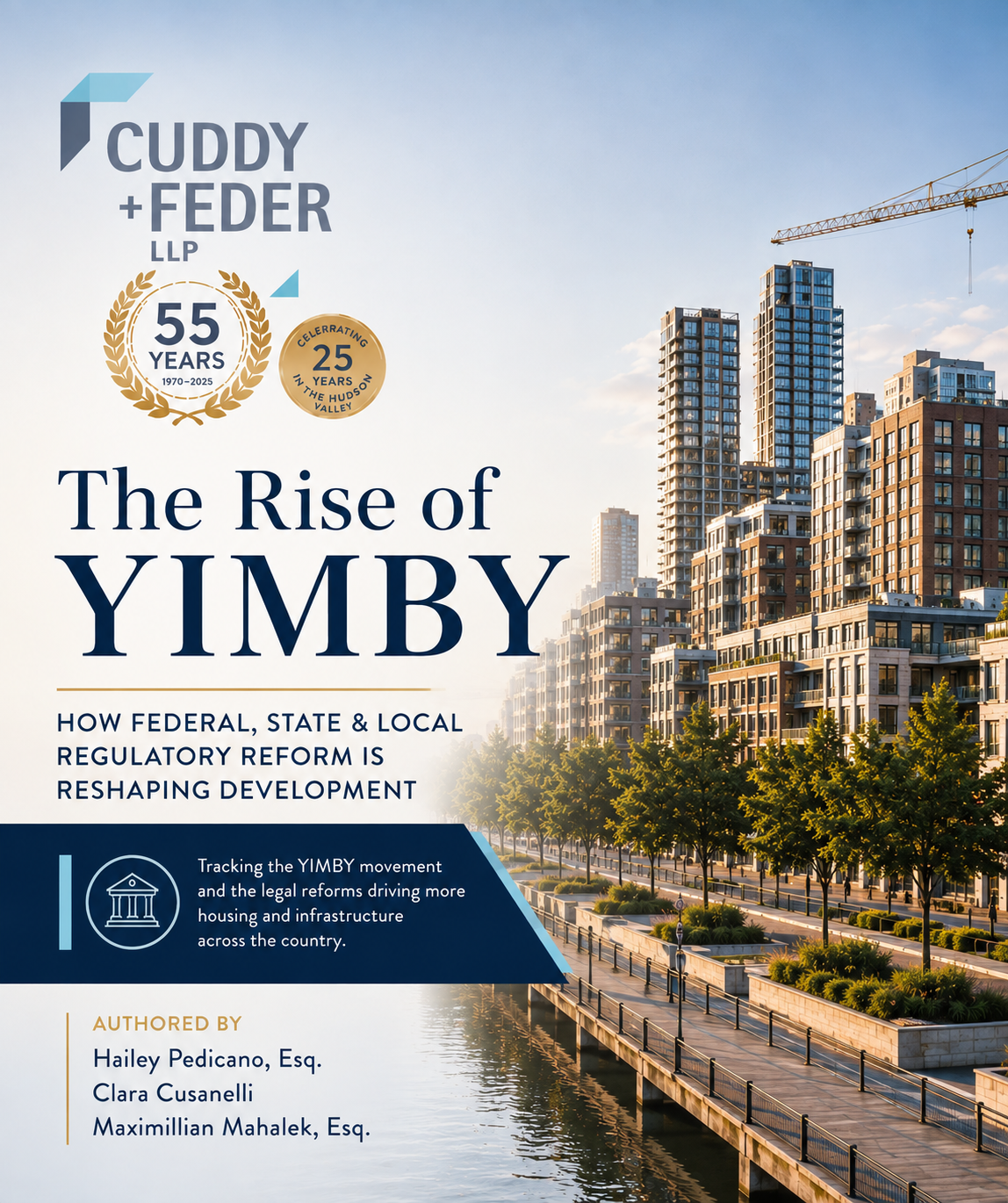
In recent years, a growing body of scholarship and national political thought is converging on government overregulation of local land use projects.
Two recent books, Why Nothing Works: Who Killed Progress―and How to Bring It Back by Marc Dunkelman, and the New York Times’ Bestseller Abundance by Ezra Klein and Derek Thompson, discuss how the layers of procedural friction have made it extraordinarily difficult to build in the United States, constraining needed infrastructure development, and exacerbating the growing housing shortage.
Indeed, there is a growing apolitical and social movement in the United States known as the YIMBY (the “Yes In My Backyard”) movement, primarily focused on building housing and infrastructure. At its core, YIMBY advocates argue that cities and states must build significantly more housing, particularly in high-demand areas, where supply has failed to keep pace with population and job growth. The YIMBY movement calls for political action to reshape the laws that have materially limited building, green infrastructure, and housing progress.
Cuddy & Feder is following this movement closely, and is tracking the regulatory changes taking place at the national, state, and local levels to take advantage of same for its Clients. We work hard to move our clients’ projects through all layers of approval, to ensure that needed homes and infrastructure can be built faster. We are continuously tracking this trend to leverage the growing political sentiments, and most importantly, a growing number of federal, state, and municipal housing and development laws, in favor of achieving our Clients’ goals effectively.
Read More >
August 04, 2026
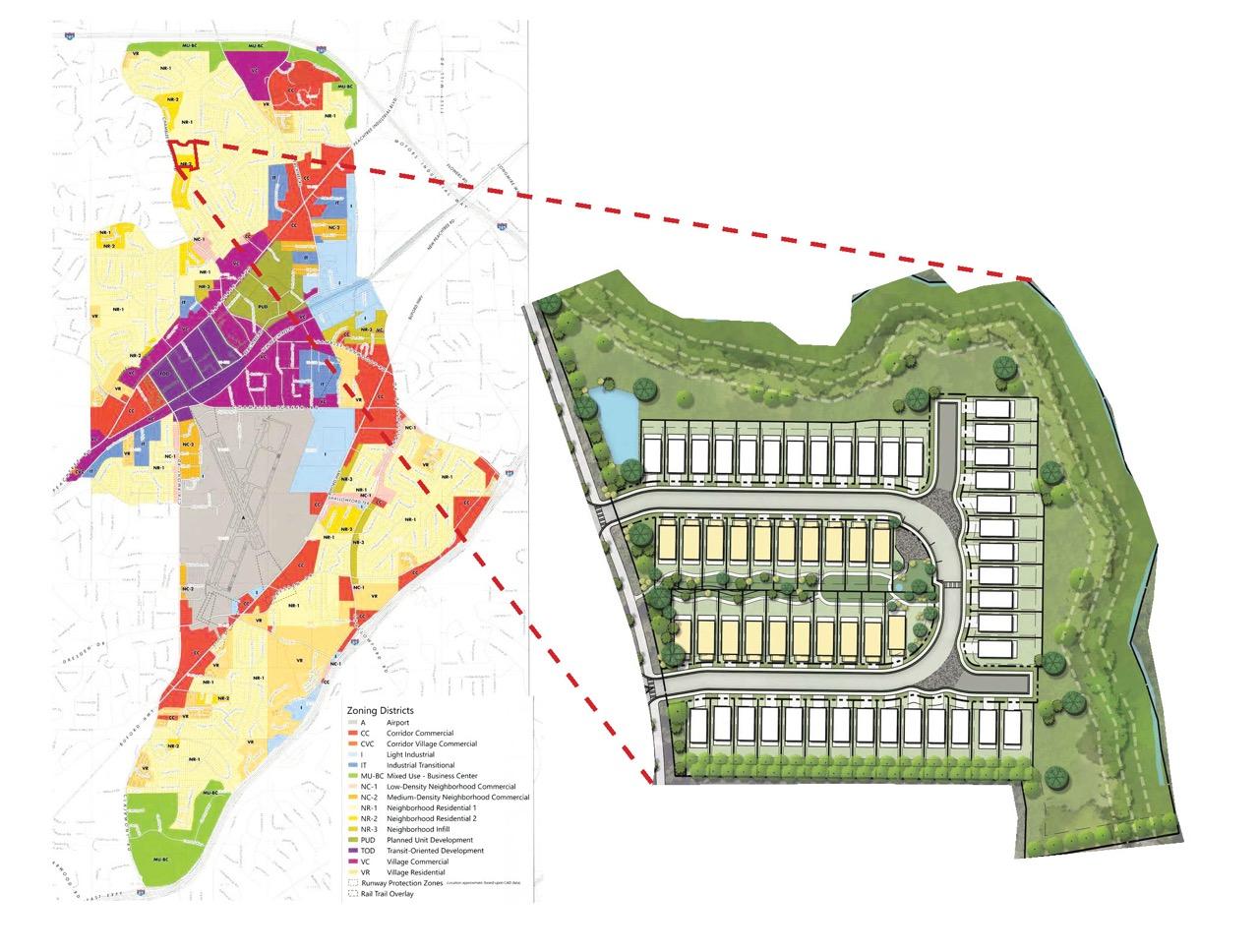
The housing market in the United States has long faced a crisis on two fronts, affordability and availability. Outdated zoning constraints are one of the factors contributing to this crisis. To combat this dual challenge, Congress has recently passed bipartisan legislation that includes reforms designed to modernize zoning practices and eliminate zoning constraints. These reforms could have a significant impact on the local entitlement process.
The 21st Century ROAD to Housing Act became law on July 11, 2026. This sweeping bill aims to promote the growth of and accessibility of housing supply throughout the United States by removing or easing regulatory burdens, modernizing Department of Housing and Urban Development (HUD) programs, streamlining discretionary environmental review on the Federal level, strengthening community banks, expanding local lending, and restricting institutional investor home purchases, among other measures. The Act attempts to ease state and local regulatory burdens by mandating the establishment of guidelines, best practices, and grant programs that facilitate less restrictive zoning requirements and procedures for residential development.
Read More >
The following materials, and all other materials on this website, are intended for informational purposes only, are not to be construed as either legal advice or as advertising by Cuddy & Feder LLP or any of its attorneys, and do not create an attorney-client relationship between you and Cuddy & Feder LLP. Please seek the advice of an attorney before relying on any information contained herein.